Among Cytokines Which of the Following Stimulate Cell Proliferation
-TNF-betaLymphotoxin-alpha causes activation and increased expression of MHC and adhesion molecules in neutrophils and other cell types. CAFs and penetrating leukocytes obligated to chemokine receptors are directly involved in cancer cell proliferation triggering PI3KAKTNF-κB and MAPKERK pathways besides helping the survival of tumour cells by hijacking programmed cell death mechanism striking coherence between apoptotic pro- and anti- molecules.

T Cell Proliferation An Overview Sciencedirect Topics
GM-CSF has been the focus of investigation into.
. This drug inhibits viral replication and proliferation. IFN-α and IFN-β are made primarily by activated T cells whereas IFN-gamma is made by fibroblasts. Our results indicate that impairment of moDC to stimulate antigen-specific T cells provides an explanation for the clinical immunodeficiency of patients with end-stage kidney disease.
These findings suggest that DCs may play a dual role in promoting both antigen-driven as well as homeostatic T cell proliferation. Like TCR stimulation DC-derived cytokines can upregulate IL-215Rβ and γc chain expression 44 45 thus inducing proliferation of naive T cells and boosting that of memory T cells in response to γc-cytokines. IFNα stimulates NK cell proliferation NK cell cytotoxicity due to upregulation of perforin and.
The results of Hamada et al. Additionally cytokine arrays for microglial culture astrocyte culture and microglial and astrocyte co-culture in different cell ratios showed that both cells secrete many cytokines involved in. Also HLA-matched CD4 hsp65-specific human T-cell clones showed markedly decreased proliferation in the group of non-responders.
MTT and 3 Hthymidine incorporation are two common methods used to measure cell proliferation. IFNα alone or together with other stimulatory cytokines induces NK cell proliferation cytotoxicity and full effector function. IL-3 - Stimulates the production of myeloid progenitor cells by hematopoietic stem cells.
These cytokines - GM-CSF and IL-3 - act on the bone marrow to increase production of. Recent studies have also begun to assign specific roles to different cytokines in embryonic. Cytokines includes interleukins IL chemokines interferons and tumor necrosis factors TNF.
IL-2 - Interleukin 2 plays an important role in growth regulation of T cells. In this sense activation of STAT1 and STAT2 regulate IFNα-mediated cytotoxicity whereas activation of STAT4 promotes IFNγ secretion. TH2 cells produce cytokines IL-4 IL-5 IL-6 IL-13 that promote immune responses against extracellular pathogens antibody responses eosinophilic responses allergic reactions.
It stimulates MHC class 1 2 molecules costimulates antigen presenting cells promotes diff. The truncated ORF2 protein was able to induce IFN- γ ELISPOT and cell proliferation responses and to produce significant amounts of IFN- γ and IL-12 cytokines but low amounts of IL-10 and. IFN-α and IFN-β inhibit cell proliferation whereas IFN-gamma stimulates antigen presentation by class II MHC molecules.
Serves a critical function in the innate immunity specific cell mediated immunity. The ERK and the p38 MAP kinases were selectively required for TCR and cytokine-driven proliferation. Finally the levels of four cytokines IFN-γ ELISPOT and cell proliferative responses following stimulation with the truncated ORF2 protein were assessed in the both groups.
Cytokines possess anti-angiogenic properties but there are indications that GM-CSF M-CSF and G-CSF might be conducive to the differentiation of endothelial progenitor cells proliferation and angiogenesis. The following are some of the functions of a few of these molecules. Stimulate or inhibit the activation proliferation and or differentiation of various cells and by regulating the secretion of antibodies or other cytokines Term Cytokine Encompasses lymphokines and monokines.
We investigated the effects of various pro-inflammatory cytokines on the proliferation rate of isolated human osteoblastic cells in primary cultures. Cytokines such as IL-2 can stimulate T cells to proliferate. This cytokine inhibits viral replication and cell proliferation increases lytic potential of natural killer cells and regulates the expression of MHC Class I and II.
The level of T cell proliferation can be used as a measurement of IL-2 concentration. Cytokine is a general term used for small secreted proteins that are key modulators of inflammation. Of naive CD4 T cells to helper t cell type 1 inhibits prolif of th2.
Dendritic cell DC-derived cytokines allowed naïve T cells to respond selectively to IL-4 and potently boosted the response of TCM to IL-7 and IL-15 by increasing the expression of the IL-2IL-15Rss and the common gamma chain gammac. Cytokines are produced in response to invading pathogens to stimulate recruit and proliferate immune cells. Some cytokines are produced by both T H1 and T H2 cells.
They are produced by virtually all cells involved in innate and adaptive immunity but especially by T helper T H lymphocytesThe activation of cytokine-producing. Several of the cytokines that stimulate fibroblast proliferation may inhibit the growth of other cell types. Therefore astrocytes clearly secrete some factors stimulating microglial proliferation but direct cellular contact with astrocytes further stimulates microglial proliferation.
IL-1 - Indirectly stimulates immune responses via various effector proteins and other cytokines. T cells proliferate in an IL-2 concentration-dependent manner. 61 showed that D-limonene has the potential to work on lymphokines IFN-γ produced by T cells that will stimulate phagocyte cells to perform phagocytic responses and may stimulate lymphocyte proliferation increase T-cell count and increase secretion of IL-12.
-TNF-alpha proinflammatory cytokine. Cytokines are low molecular weight soluble proteins that are produced in response to an antigen and function as chemical messengers for regulating the innate and adaptive immune systems. Both of these cytokines also enhanced.
Our data demonstrated that the macrophages that upregulated the cytokines to increase cell proliferation of the immortalized normal prostate epithelial cells in the co-culture system were similar. Under hypoxic conditions stem cells can release growth factors and cytokines such as transforming growth factor TGF-β interleukin IL-6 vascular endothelial growth factor VEGF fibroblast growth factor FGF-2 hepatocyte growth factor HGF insulin-like growth factor IGF angiopoietin Ang-1 stromal cell-derived factor SDF-1 matrix metalloproteinase. -Produced by macrophages and other cells in response to infection inflammation or environmental stressors.
D-limonene may increase the production of IL-2 one of the cytokines. IFN-α and IFN-β primarily activate macrophages whereas IFN-gamma halts viral activity. While TGF-beta can induce anchorage-independent growth of nonneoplastic cells it inhibits the proliferation of most normal cell types.
Interleukin-1 beta IL-1 beta and tumor necrosis factor-beta TNF-beta time- and dose-dependently enhanced the proliferation of human osteoblasts.
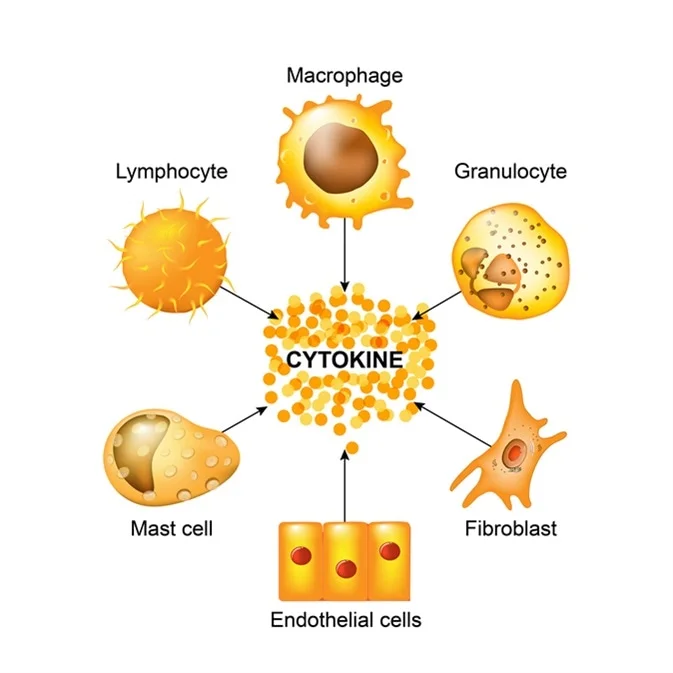
What Are Cytokines
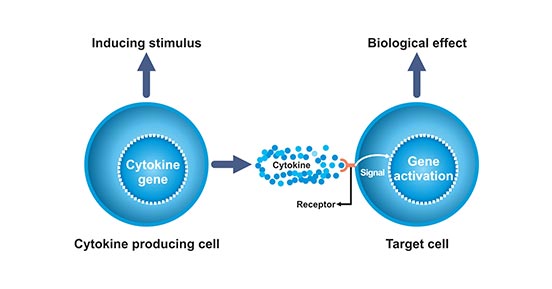
What Is The Function Of Cytokines Cusabio

Augmentation Of Nk Cell Proliferation And Anti Tumor Immunity By Transgenic Expression Of Receptors For Epo Or Tpo Molecular Therapy
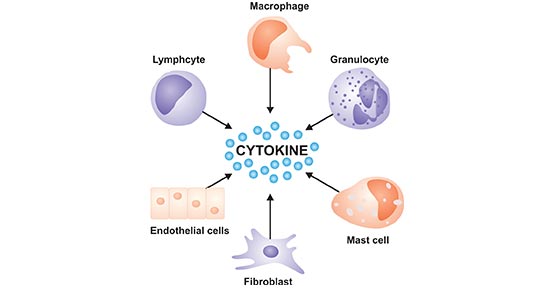
Get An Overview Of Cytokines Cusabio


Comments
Post a Comment